







To the readers and future authors of the journal

ISSN 2408-9176 (Online)
ISSN 2312-7899 (Printed)
 "ΠΡΑΞΗΜΑ" is included in the Scopus database
The publisher of this scientific journal is Tomsk State Pedagogical University (Russia, Tomsk).
Dear colleagues!
The journal "ΠΡΑΞΗMΑ. Journal of Visual Semiotics" ("PRAXEMA") is a journal dedicated to the discussion of theoretical problems of modern visual semiotics, which includes the study of the visual aspects of the organization and functioning of culture as a communicative environment.
Visual semiotics is understood as one of the new dynamic human sciences and as a multidisciplinary field in which methods and achievements of traditional branches of the humanities interact: philosophy, cultural studies, sociology, political science, art history, religious studies, esthetics, ethics, history, linguistics, and ethnography.
The emphasis on the communicative aspects of visual semiotics determines the dominant research perspective on this topic. It offers the possibility to focus on the relationship between visual phenomena and systems of visual phenomena and cultural and anthropological practice. In this (pragmatic) perspective, every visual sema can and should be interpreted as a praxema: a sign representing and producing certain pragmatic installations, norms, and effects. The object of visual semiotics is thus understood as a sphere of cultural and anthropological praxis, a space of mutual understanding and interaction through visually expressed, existentially important meanings.
Frequency: 4 issues per year.
Articles on the following topics can be published in the journal:
- philosophy of the visual image (semantics, syntax, pragmatics)
- theory of the sign and sign communication; visual (non-verbal) languages
- visual axiology (analysis of the visual experience of the fixation and translation of norms and values in culture; cultural and semiotic transfer; visual environment as a field of normative didactics; visual semiotics as communicative axiology)
- visual anthropology (philosophical, ethnological, and sociological aspects of the representation of human identity)
- visual practices in cultures; visual aspects of the representation of cultural realities; visual arts in the life and history of cultures
- visual aspects of government policy and regional management
- semiotic diagnostics of social and cultural change; visual parameters of culture in relation to the tendencies of humanization/dehumanization of society
- visual semiotics and humanitarian knowledge; the visual aspects of modern Humanities (history, sociology, political science, archeology)
- visual aspects of government policy and regional management
- semiotics of photography
- semiotics of cinema
- semiotics of architecture
- semiotics and hermeneutics of the human lifeworld; anthropology of space
- visual aspects of the functioning of the media
- semiotics of games
- visual semiotics and esthetics
- visual semiotics and cultural geography
- visual aspects of pedagogy
- visual aspects and the dominance of cognitive practices
- visual and virtual
This list is not exhaustive and can be extended to other areas of visual semiotic research at the expense of attention. The languages of this journal are Russian, English and French. For publication in the journal, the editorial board accepts contributions in the following genres: scientific article, translation of a scientific article, essay, interview, review, bibliographic review, and report on a scientific event. All submitted materials will be reviewed.
The founder of this scientific journal is Tomsk State Pedagogical University (Tomsk, Russia).
The journal is included in the subscription catalog of "Russian Press" Index: 90129.
News
We announce the topic of Issue 4 of the journal in 2026: "Texts in Modern Education: Hybrid Genesis and Hybrid Forms".
Publication date: Monday, 24 November 2025
On November 20, the International Scientific and Practical Conference "Education in Texts and Text in Education" was held at Lomonosov Moscow State University. Among the papers presented was I.V. Melik-Gaikazyan's paper, "Semiotic Optimum: Between Hybrid Genesis and Hybrid Forms".
“Initially, this concept < the author's proposed concept of the "semiotic optimum"> captured the general form of a solution to a methodological task under conditions of sudden (e.g., quarantine) changes in the circumstances of the educational process. In other words, the rapid development of a course structure where the main content would correspond to the teaching goals, and its form would assume the required appearance. Thus, the optimum is a palliative reaction to external circumstances from the standpoint of one's own goals, understood in a specific way. This optimum is deemed "semiotic" because it focuses on finding an effective syntax between the symbolic expression of transformation goals and the semantic-pragmatic expression of the goals of teaching itself”. [Melik-Gaykazyan I. (2025). "Semiotic optimum": Genesis of discovered situations. Vestnik Tomskogo gosudarstvennogo universiteta. Filosofiya. Sotsiologiya. Politologiya – Tomsk State University Journal of Philosophy, Sociology and Political Science, 88]
Discussion of this paper during the conference and afterward led to the formulation of the announced topic. Submissions for Issue 4 will be accepted until July 20, 2026. This issue will contain only 8-10 articles, so we invite you to submit an abstract of your article in Russian by May 1, 2026 (praxema@tspu.ru, subject line: "Issue 4"). According to the journal's accepted formatting guidelines, this abstract presents the purpose of the study, the sequential solution to the problems, the approaches and methods used, the main results of the study, and the scientific significance of these results. The abstract should be between 2,500 and 3,000 characters long, excluding spaces.
Request to Update Domain and Email Information for ΠΡΑΞΗMΑ. Journal of Visual Semiotics
Publication date: Thursday, 19 December 2024
Dear Colleagues,
We would like to inform you that our scientific journal, Tomsk Journal of ΠΡΑΞΗMΑ. Journal of Visual Semiotics, has updated its domain name.
The domain has changed from https://praxema.tspu.edu.ru/ to https://praxema.tspu.ru/.
Currently, both web addresses are operational. However, as of December 25, 2024, the domain https://praxema.tspu.edu.ru/ will no longer be active.
The current issue of "ΠΡΑΞΗMΑ. Journal of Visual Semiotics" (issue 4) has been published.
Publication date: Monday, 16 December 2024
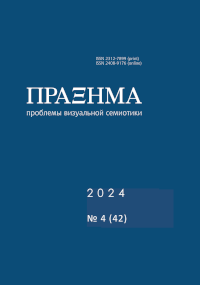
The journal "ΠΡΑΞΗΜΑ" is included in the Scopus database.
Publication date: Monday, 25 June 2018
Dear readers and authors, the journal "ΠΡΑΞΗΜΑ" has been included in the Scopus database since 2018.Now "ΠΡΑΞΗΜΑ. Problems of Visual Semiotics" is included in the Ulrich's Periodicals Directory database.
Publication date: Saturday, 25 October 2014
Now "ΠΡΑΞΗΜΑ. Problems of Visual Semiotics" is included in the Ulrich's Periodicals Directory database.
Information for Authors
TERMS OF SUBMISSION OF MANUSCRIPTS
TO SCIENTIFIC JOURNAL PEDAGOGICAL REVIEW
Submission Requirements
The journal publishes scientific papers in the following groups of scientific areas:
The journal is included in the “List of the leading reviewed scientific journals and publications, which publish basic scientific results of theses for the degree of Doctor and Candidate of Sciences” of the Highest Attestation Commission of the Ministry of Education and Science of the Russian Federation
Frequency of publication: 6 issues per year.
Requirements to manuscripts submitted for publication
Manuscripts should be submitted by e-mail or by the online submission system at the website of the Bulletin.
The manuscript should consist of two blocks, Russian and English, combined into one file.
1. UDC, the full name (first, middle and second) of the author(s), the title of the article, the abstract of the article, the key words, the text of the article, the list of references (issued in accordance with GOST P 7.05-2008), information about the authors: the place of work (study), the academic degree, the academic title, position, postal address of the organization, phone number, fax, e-mail.
The abstract should follow the structure of the article (introduction, goal, methods of research, main results, conclusion) and characterize the theoretical and practical significance of the obtained research results.
The volume of abstracts (summaries) depends on the content of the article, but should not be less than 250 words. All abbreviations must be disclosed (in spite of the fact that they will be disclosed in the main text of the article).
2. In English: the full name (first, middle and second) of the author(s), the title of the article, the abstract of the article (250 words), the key words, the information about the authors: the place of work (study), postal address of the organization), the list of references.
For publication of the article the authors need to complete, sign and send by mail the agreement which is posted on the journal’s website (DOWNLOAD AGREEMENT).
The Main Text
The manuscript should consist of at least 18 A4 format pages (including references, charts, tables, etc.), should be typed in a text editor (Times New Roman, 14-point font; 1.5 line spacing; alignment by width; paragraph indent 1, 25; no line spaces between paragraphs; hyphen must be differentiated from dash) and saved in DOC format. Images should be in JPEG or TIFF formats (at a minimum of 300 dpi), diagrams should be saved in MS Excel and attached in separate files. Page margins should be 2 cm from each edge.
The main text of the manuscript should be presented in Russian or English in a certain sequence and should be divided into sections with brief subtitles, and highlighted graphically (valid selections are bold, italics):
1. Introduction.
2. Material and Methods.
3. Results (Results of research).
4. Conclusion (Findings).
The structure of the text may depend on the direction of the research (empirical or theoretical). Theoretical research may carry the author's logic of the statement, in accordance with the order of presentation of the argument.
Information on financial support and grants should not shown in the footnote, but must be placed in the text of the article as a separate paragraph (for example, at the end of the main text before the reference list).
The Reference List
Bibliographical sources should be listed in order of citation, and not alphabetically. The records should provide full details (if possible). (GOST R 7.05-2008 “Bibliographic references. General requirements and rules”) are given in square brackets in accordance with the reference lists in which the sources are listed in the order of citation, not alphabetically. If necessary, the page numbers may be given besides the citation source numbers (e.g. ... [8, p. 25]). Each publication or unpublished source (archival document) is given in the list only once and with its own number; in subsequent references this number is indicated. In case of the reference to several papers all their numbers should be indicated.
The list of references (at least 20 sources) imply bibliographic information on all publications and sources cited in the article, and should not contain works that are not referenced in the text, the prevalence of recent publications is also desirable. An obligatory element, reflecting the relevance of the publication, indicating a high level of research is the presence in the list of references of the works of scientists represented in Russian Science Citation Index. For journals and periodical publication articles: indicate the surname and initials of all authors (not just the first three), the title of the article, the journal title, year, volume, issue, number, the interval of pages (from and to) on which the article was published in this journal, the pages on which the subject of the reference is located in the main text, next to the reference number, embedded in square brackets (e.g. [8, c. 25; 12, c. 12–14]). For foreign journals and publications: the volume is indicated as “V.” (for the publications in English) or “Bd.” (for the publications in German), the page – by the capital letter P. (for English editions) or S. (for the German editions). For books (monographs, manuals, etc.): indicate surnames and initials of all authors, title, and other relevant information, editors, place of publication (city), publisher, year of publication, the total number of pages. For proceedings (books) articles: surname and initials of the author(s), article title, title of the collection, place of publication (city), publisher, year of publication, number of pages.
For theses and abstracts of theses: surname and initials of the author(s), full title of the abstract, followed by a colon and the the degree pursued by the author with the lower case letter, place of publication (city), year, number of pages.
English Language Block
The surnames of the authors of the manuscript are given in Latin alphabet according to one of the standards of transliteration (Russian words in English letters). The translated title of the manuscript should be on a separate line and highlighted graphically.
Summary in English (Abstract) should be structured in accordance with the text of the article, and should consist of not less than 250 words.
Use active rather than passive voice. In order to avoid distortion of the basic concepts it is desirable to have the corresponding English terms.
English-language keywords (Key words) should be on a separate line.
The list of references (References) should be in the Latin alphabet in accordance with the list in the Russian-language block of the article.
Briefly (for the sources in the list of references in the languages using Cyrillic): the recording of the reference source should contain the following information: transliterated surnames and initials of the authors, transliteration of article title and its translation into English (for journals and periodical collections), for articles from the collections of works and materials of conferences and symposia it is enough to provide the English translation of the title of the article, transliteration of the title and its translation into English (for books); transliteration of the title of the journal (collection) and its translation; for books – the place of publication (city), publisher, year, the total number of pages; for journals – year, volume, issue, number, page range (from and to): the language of publication (in Russian, in Ukrainian, etc.).
The sources in the list of references in languages that use the Latin alphabet are repeated in References (they are not translated into English and the language of the publication is not indicated). Details of the order of designing the reference list, see in Appendix 2 on the website of the journal (https://npo.tspu.ru/en). Place of work (study) of the author(s): the organization in English (the official English version) and its postal address – street in transliteration, building number, city in English (e.g., Moscow, St. Petersburg, etc.), country in English, postal code.
All manuscripts submitted for publication in the Bulletin undergo a peer review process and are accepted in case of a positive result. The review procedure is posted on the website of the Bulletin.
The submitted articles are checked for borrowings via internet service provider "Antiplagiat" (Antiplagiarism), required originality of at least 75%. The search is performed on the indexed internet pages and a collection of full texts of articles of the scientific electronic library Elibrary.ru.
The editorial board reserves the right to reject manuscripts that do not meet the above-mentioned requirements. The received materials will not be returned. In case of a negative peer review decision the author will get a motivated refusal.
The editors accept preliminary purchase orders for subsequent issues of the Bulletin.
According to the Federal Law No. 255-FZ of 14 July 2022 "On Control over the Activities of Persons under Foreign Influence," any mentioning of such a person in materials intended for an unlimited number of people (articles, books, posts, videos) must be accompanied by a clear note in the footnotes (Recognized as a foreign agent)."
Submitted articles are registered on the official website of the journal "Pedagogical Review".
The cost of publishing articles
Сopyright information
The author retains all rights to the article material without restriction. When incorporating the article, in whole or in part, into other works, the author is required to cite the publication in the journal "Pedagogical Review"
The Bulletin is included in the unified catalog “ROSPECHAT”. Index 82680.
For any questions about the publication of the articles refer to the editors:
e-mail: vestnik@tspu.ru
Tel.: (3822) 311-325
Editorial Board
-
Editor-in-Chief
- S.I. Pozdeeva
- Doctor of Sciences in Pedagogy, professor, Tomsk State Pedagogical University (Tomsk, Russian Federation);
- E-mail: pozdeevasi@tspu.ru
-
Editorial Board
- O.N. Igna
- Doctor of Sciences in Pedagogy, associate professor (Deputy Editor-in-Chief) (Tomsk, Russian Federation);
- E-mail: onigna@tspu.ru
- T.G. Bokhan
- Doctor of Sciences in Psychology, professor (Tomsk, Russian Federation);
- N.A. Buravlyova
- Candidate of Sciences in Psychology, associate professor (Tomsk, Russian Federation);
- E.V. Volkova
- Doctor of Sciences in Psychology, associate professor (Moscow, Russian Federation);
- E.G. Gelfman
- Doctor of Sciences in Pedagogy, professor (Tomsk, Russian Federation);
- L.Ya. Dorfman
- Doctor of Sciences in Psychology, professor (Perm, Russian Federation);
- J.N. Ziyatdinova
- Doctor of Sciences in Pedagogy, associate professor (Kazan, Russian Federation);
- V.V. Laptev
- Doctor of Sciences in Pedagogy, professor, member of Russian Academy of Education, Honored Scientist of the Russian Federation (Saint Petersburg, Russian Federation);
- E.I. Snopkova
- Doctor of Sciences in Pedagogy, professor;
- V.A. Starodubtsev
- Doctor of Sciences in Pedagogy, professor (Tomsk, Russian Federation);
- I.Yu. Tarkhanova
- Doctor of Sciences in Pedagogy, associate professor (Yaroslavl, Russian Federation);
- P.D. Tishchenko
- Doctor of Sciences in Philosophy, Institute of Philosophy of Russian Academy of Sciences (Moscow, Russian Federation);
- M.A. Kholodnaya
- Doctor of Sciences in Psychology, professor, Institute of Psychology of Russian Academy of Sciences (Moscow, Russian Federation);
- M.A. Chervonny
- Doctor of Sciences in Pedagogy, associate professor (Tomsk, Russian Federation);
- E. Elizalde
- professor, Institute of Space Studies of Catalonia (Barcelona, Spain);
- A. Nakaya
- professor, Hiroshima University (Hiroshima, Japan);
- A.I. Istenic
- professor, University of Primorska (Slovenia).
The journal is included:
- in the system of the Russian Science Citation Index
- in the database of periodicals “Ulrich's Periodical Directory”.
© Tomsk State Pedagogical University, 2007.
All rights reserved.
Registration certificate of mass media issued on 25th January 2013 by the RF Ministry of printed mass media, television and radio and mass communication, PI № FS 77 - 52642.
Contacts
Editor of the information and editorial department — Yulia Yurievna Afanasyeva.
E-mail: npo@tspu.ru
Address (location): ul. Gerzena, 49
Address (correspondence): "Pedagogical Review".
ul. Kievskaya, 60, 634061, Tomsk
Fax: (3822) 311-464
Tel.: (3822) 311-325
Subcategories
News
News