







To the readers and future authors of the journal

ISSN 2408-9176 (Online)
ISSN 2312-7899 (Printed)
 "ΠΡΑΞΗΜΑ" is included in the Scopus database
The publisher of this scientific journal is Tomsk State Pedagogical University (Russia, Tomsk).
Dear colleagues!
The journal "ΠΡΑΞΗMΑ. Journal of Visual Semiotics" ("PRAXEMA") is a journal dedicated to the discussion of theoretical problems of modern visual semiotics, which includes the study of the visual aspects of the organization and functioning of culture as a communicative environment.
Visual semiotics is understood as one of the new dynamic human sciences and as a multidisciplinary field in which methods and achievements of traditional branches of the humanities interact: philosophy, cultural studies, sociology, political science, art history, religious studies, esthetics, ethics, history, linguistics, and ethnography.
The emphasis on the communicative aspects of visual semiotics determines the dominant research perspective on this topic. It offers the possibility to focus on the relationship between visual phenomena and systems of visual phenomena and cultural and anthropological practice. In this (pragmatic) perspective, every visual sema can and should be interpreted as a praxema: a sign representing and producing certain pragmatic installations, norms, and effects. The object of visual semiotics is thus understood as a sphere of cultural and anthropological praxis, a space of mutual understanding and interaction through visually expressed, existentially important meanings.
Frequency: 4 issues per year.
Articles on the following topics can be published in the journal:
- philosophy of the visual image (semantics, syntax, pragmatics)
- theory of the sign and sign communication; visual (non-verbal) languages
- visual axiology (analysis of the visual experience of the fixation and translation of norms and values in culture; cultural and semiotic transfer; visual environment as a field of normative didactics; visual semiotics as communicative axiology)
- visual anthropology (philosophical, ethnological, and sociological aspects of the representation of human identity)
- visual practices in cultures; visual aspects of the representation of cultural realities; visual arts in the life and history of cultures
- visual aspects of government policy and regional management
- semiotic diagnostics of social and cultural change; visual parameters of culture in relation to the tendencies of humanization/dehumanization of society
- visual semiotics and humanitarian knowledge; the visual aspects of modern Humanities (history, sociology, political science, archeology)
- visual aspects of government policy and regional management
- semiotics of photography
- semiotics of cinema
- semiotics of architecture
- semiotics and hermeneutics of the human lifeworld; anthropology of space
- visual aspects of the functioning of the media
- semiotics of games
- visual semiotics and esthetics
- visual semiotics and cultural geography
- visual aspects of pedagogy
- visual aspects and the dominance of cognitive practices
- visual and virtual
This list is not exhaustive and can be extended to other areas of visual semiotic research at the expense of attention. The languages of this journal are Russian, English and French. For publication in the journal, the editorial board accepts contributions in the following genres: scientific article, translation of a scientific article, essay, interview, review, bibliographic review, and report on a scientific event. All submitted materials will be reviewed.
The founder of this scientific journal is Tomsk State Pedagogical University (Tomsk, Russia).
The journal is included in the subscription catalog of "Russian Press" Index: 90129.
News
We announce the topic of Issue 4 of the journal in 2026: "Texts in Modern Education: Hybrid Genesis and Hybrid Forms".
Publication date: Monday, 24 November 2025
On November 20, the International Scientific and Practical Conference "Education in Texts and Text in Education" was held at Lomonosov Moscow State University. Among the papers presented was I.V. Melik-Gaikazyan's paper, "Semiotic Optimum: Between Hybrid Genesis and Hybrid Forms".
“Initially, this concept < the author's proposed concept of the "semiotic optimum"> captured the general form of a solution to a methodological task under conditions of sudden (e.g., quarantine) changes in the circumstances of the educational process. In other words, the rapid development of a course structure where the main content would correspond to the teaching goals, and its form would assume the required appearance. Thus, the optimum is a palliative reaction to external circumstances from the standpoint of one's own goals, understood in a specific way. This optimum is deemed "semiotic" because it focuses on finding an effective syntax between the symbolic expression of transformation goals and the semantic-pragmatic expression of the goals of teaching itself”. [Melik-Gaykazyan I. (2025). "Semiotic optimum": Genesis of discovered situations. Vestnik Tomskogo gosudarstvennogo universiteta. Filosofiya. Sotsiologiya. Politologiya – Tomsk State University Journal of Philosophy, Sociology and Political Science, 88]
Discussion of this paper during the conference and afterward led to the formulation of the announced topic. Submissions for Issue 4 will be accepted until July 20, 2026. This issue will contain only 8-10 articles, so we invite you to submit an abstract of your article in Russian by May 1, 2026 (praxema@tspu.ru, subject line: "Issue 4"). According to the journal's accepted formatting guidelines, this abstract presents the purpose of the study, the sequential solution to the problems, the approaches and methods used, the main results of the study, and the scientific significance of these results. The abstract should be between 2,500 and 3,000 characters long, excluding spaces.
Request to Update Domain and Email Information for ΠΡΑΞΗMΑ. Journal of Visual Semiotics
Publication date: Thursday, 19 December 2024
Dear Colleagues,
We would like to inform you that our scientific journal, Tomsk Journal of ΠΡΑΞΗMΑ. Journal of Visual Semiotics, has updated its domain name.
The domain has changed from https://praxema.tspu.edu.ru/ to https://praxema.tspu.ru/.
Currently, both web addresses are operational. However, as of December 25, 2024, the domain https://praxema.tspu.edu.ru/ will no longer be active.
The current issue of "ΠΡΑΞΗMΑ. Journal of Visual Semiotics" (issue 4) has been published.
Publication date: Monday, 16 December 2024
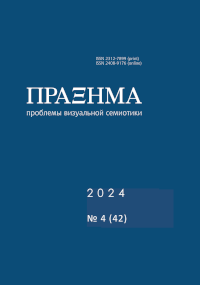
The journal "ΠΡΑΞΗΜΑ" is included in the Scopus database.
Publication date: Monday, 25 June 2018
Dear readers and authors, the journal "ΠΡΑΞΗΜΑ" has been included in the Scopus database since 2018.Now "ΠΡΑΞΗΜΑ. Problems of Visual Semiotics" is included in the Ulrich's Periodicals Directory database.
Publication date: Saturday, 25 October 2014
Now "ΠΡΑΞΗΜΑ. Problems of Visual Semiotics" is included in the Ulrich's Periodicals Directory database.
Review Procedure
Peer Review Procedure: Rules of review of the papers submitted for publication in the academic journal "Tomsk Journal of Linguistics and Anthropology"
- Manuscripts submitted for publication to the journal are checked for compliance with technical requirements and for compliance with the profile of the journal. Materials that do not meet these requirements are returned to the authors with explanations about the reasons of refusal to publish. The submitted articles are checked for borrowings via internet service provider "Antiplagiat" (Antiplagiarism).
- Accepted papers are sorted by category, in accordance with the research area. Information about the accepted submissions is posted on the journal’s website.
- All submissions received by the journal are forwarded in accordance with their disciplinary profile for the review by the members of the Editorial Board, and upon decision by the editor-in-chief - to external experts from among the faculty of Russian and international universities and research institutions.
- Reviews are conducted confidentially. The author of the submission has an opportunity to receive the text of the review. After a positive review without comments, the submission is accepted for publication and the author is notified. If the submission is generally assessed positively, but there are some comments from the reviewers, the submission along with the comments is sent back to the author for revision.
- In the event of negative feedback, the author will receive a reasoned refusal. Contact details of the reviewer are not specified and all further communication is made through the editorial office of the journal. The editorial office upon requests of the authors and expert council of the Highest Attestation Board presents reviews of manuscripts. Reviews are kept in the publishing and editorial offices not less than 5 years.
- If the authors disagree with the opinion of the reviewer, the author has the right to provide a reasoned response to the journal’s editorial board. The submission may be re-directed for review or discussion to other members of the editorial board.
- Brief messages, letters to the editor, reviews, discussion papers, personal information, etc. pass only the primary expertise of the editorial board in accordance with the areas of specialization and they are not forwarded for full external review.
E-mail of the editorial office: TJLA@TSPU.RU
Information for Authors
Requirements for the submission to the “Tomsk Journal of Linguistics and Anthropology”.
Submissions for publication are accepted electronically in two formats (MS.DOC and Adobe.PDF) at tjla@tspu.ru.
All accepted materials are published free of charge.
The volume of the submission generally should not be less than 12 A4 pages excluding the references, and should not exceed 16 A4 pages including References, Graphs, Tables, etc. The text must to be formatted in Times New Roman font, 14pt, line spacing 1.5, all margins 2cm, and saved in two formats: as MS.DOC and Adobe.PDF files. Graphs, Figures are to be either in JPEG or TIFF formats, while Diagrams maybe in MS Excel format, all submitted as separate attached files.
Cited bibliography and sources are to be listed alphabetically (Russian sources are accompanied by transliteration and translation into English give in [square brackets]). References in the text are to show in Parentheses with the last name of the author, the year of publications and the pages (e.g. (Author, 1970: 136)).
For the submissions in Russian:
- file with the submission in Russian should have a file name containing the last name of the author in transliteration followed by language code "rus": avtor-rus.doc, avtor-rus.pdf
- File content:
- UDC,
- Last Name and initial of the author(s) in Russian: Aвтор A., Aвтор B.,
- Russian title of the paper,
- Russian abstract (at least 250 words in length and reflecting representatively the content of the paper),
- Russian keywords, separated by comma (5-15) and following the words: Ключевые слова:,
- text of the paper in Russian at least 12 pages in length,
- language examples should be presented in a glossed format using Leipzig glossing rules; it is recommended that either Charis SIL or Doulos SIL fonts are used for notation,
- References in Russian (List of Sources) in alphabetical order, under the title "Список литературы:",
- Full name of the author in Russian,
- Affiliation / work address of the author(s) with the full address,
- degree of the author(s),
- academic title of the author(s),
- academic position of the author(s),
- e-mail address of the author(s).
- File content:
- file in English should have a file name containing the last name of the author in transliteration followed by language code "eng": avtor-eng.doc, avtor-eng.pdf
- File content:
- Last Name and initial of the author(s): Author A., Author B.,
- English title of the paper,
- English abstract (100 words in length 250 words in length and reflecting representatively the content of the paper),
- English keywords, separated by comma (5-15) and following the words: Key words:,
- References in English (List of Sources) in alphabetical order, under the title "References:", Russian sources have to be transliterated and an English translation of the title is to be added [in square brackets],
- Full name of the author in transliteration,
- Affiliation / work address of the author(s) with the full address,
- degree of the author(s),
- academic title of the author(s),
- academic position of the author(s),
- e-mail address of the author(s).
- File content:
For the submissions in English:
- file in English should have a file name containing the last name of the author in transliteration followed by language code "eng": avtor-eng.doc, avtor-eng.pdf
- File content:
- UDC,
- Last Name and initial of the author(s): Author A., Author B.,
- English title of the paper,
- English abstract (250 words in length and reflecting representatively the content of the paper),
- English keywords, separated by comma (5-15) and following the words: Key words:,
- text of the paper in English at least 12 pages in length,
- language examples should be presented in a glossed format using Leipzig glossing rules; it is recommended that either Charis SIL or Doulos SIL fonts are used for notation,
- References in English (List of Sources) in alphabetical order, under the title "References:", Russian sources have to be transliterated and an English translation of the title is to be added [in square brackets],
- Full name of the author in transliteration
- Affiliation / work address of the author(s) with the full address,
- degree of the author(s),
- academic title of the author(s),
- academic position of the author(s),
- e-mail address of the author(s).
- File content:
- file in Russian should have a file name containing the last name of the author in transliteration followed by language code "rus": avtor-rus.doc, avtor-rus.pdf
- File content:
- Last Name and initial of the author(s) in Russian: Автор A., Автор Б.,
- Russian title of the paper,
- Russian abstract (250 words in length and reflecting representatively the content of the paper),
- Russian keywords, separated by comma (5-15) and following the words: Ключевые слова:,
- References in Russian (List of Sources) in alphabetical order, under the title "Список литературы:",
- Full name of the author in Russian,
- Affiliation / work address of the author(s) with the full address,
- degree of the author(s),
- academic title of the author(s),
- academic position of the author(s),
- e-mail address of the author(s).
- File content:
For publication of the article the authors need to complete, sign and send by mail the agreement which is posted on the journal’s website (DOWNLOAD AGREEMENT). The number of co-authors should not exceed 3 people.
The submitted articles are checked for borrowings via internet service provider "Antiplagiat" (Antiplagiarism), required originality of at least 75%. The search is performed on the indexed internet pages and a collection of full texts of articles of the scientific electronic library Elibrary.ru.
From 2017, all publications in TJLA are assigned DOI (Digital Object Identifier) - a unique identifier of the publication.
According to the Federal Law No. 255-FZ of 14 July 2022 "On Control over the Activities of Persons under Foreign Influence," any mentioning of such a person in materials intended for an unlimited number of people (articles, books, posts, videos) must be accompanied by a clear note in the footnotes (Recognized as a foreign agent)."
The Journal is indexed in the following:
ERIH PLUS,
Russian Science Citation Index (RSCI),
Ulrich's Periodicals Directory,
Web of Science Core Collection's Emerging Sources Citation Index (ESCI).
Editorial Board
Editor in Chief:
V. M. Lemskaya, Cand. Sci. (Psychology), associate professor (Tomsk, Russian Federation) E-mail: lemskaya@tspu.ru
Editorial Board:
- T.A. Goncharova
- Cand. Sci. (History), Assoc. Professor, (Deputy Editor-in Chief) (Tomsk, Russia),
- e-mail: gonczarowa@tspu.ru;
- N.V. Poljakova
- Cand. Sci. (Philology), Assoc. Professor, (Deputy Editor-in Chief) (Tomsk, Russia),
- e-mail: nvp@tspu.ru;
- A.V. Baulo
- Dr. Sci. (History), Leading Researcher, Institute of Archaeology and Ethnography, SB RAS (Novosibirsk, Russia);
- A.V. Dybo
- Dr. Sci. (Philology), Corresponding Member of RAS, Institute of Linguistics, RAS (Moscow, Russia);
- A.A. Kim
- Dr. Sci. (Philology), Assoc. Professor, TSPU (Tomsk, Russia);
- E.A. Kryukova
- Cand. Sci. (Philology), Assoc. Professor, TSPU (Tomsk, Russia);
- V.V. Napolskikh
- Dr. Sci. (History), Corresponding Member of RAS, Institute Of History And Archaeology, Ural Branch of RAS (Moscow, Russia);
- L.M. Pletneva
- Dr. Sci. (History), Leading Researcher, TSPU (Tomsk, Russia);
- V.A. Plungyan
- Dr. Sci. (Philology), Academician of RAS, Vinogradov Institute of the Russian Language, RAS (Moscow, Russia);
- N.A. Tuchkova
- Dr. Sci. (History), Leading Researcher, Museum of Nature and Man (Khanty-Mansiysk, Russia);
- M.P. Chernaya
- Dr. Sci. (History), Professor, TSU (Tomsk, Russia);
- L.I. Sherstova
- Dr. Sci. (History), Professor, TSU (Tomsk, Russia);
- A.Yu. Filchenko
- Ph.D. Linguistics, Nazarbayev University (Astana, Kazakhstan);
- E.G. Kotorova
- Dr. Sci. (Philology), Professor (em.) (Berlin, Germany);
- Z. Nagy
- Dr. Sci. (Anthropology), Professor, University of Pecs (Pecs, Hungary);
- O.S. Potanina
- Cand. Sci. (Philology), Nazarbayev University (Astana, Kazakhstan);
- M. Erdal
- Dr. Sci. (Linguistics), Professor (em.) (Istanbul, Turkey);
- E.J. Vajda
- Professor, Western Washington University (Bellingham, USA);
- B. Wagner-Nagy
- Professor, University of Hamburg (Hamburg, Germany).
© Tomsk State Pedagogical University, 2013 All rights reserved.
Registration certificate of mass media issued on 25.01.2013 by the RF Ministry of printed mass media, television and radio and mass communication, PI № FS 77 - 52641.

Subcategories
News
News